
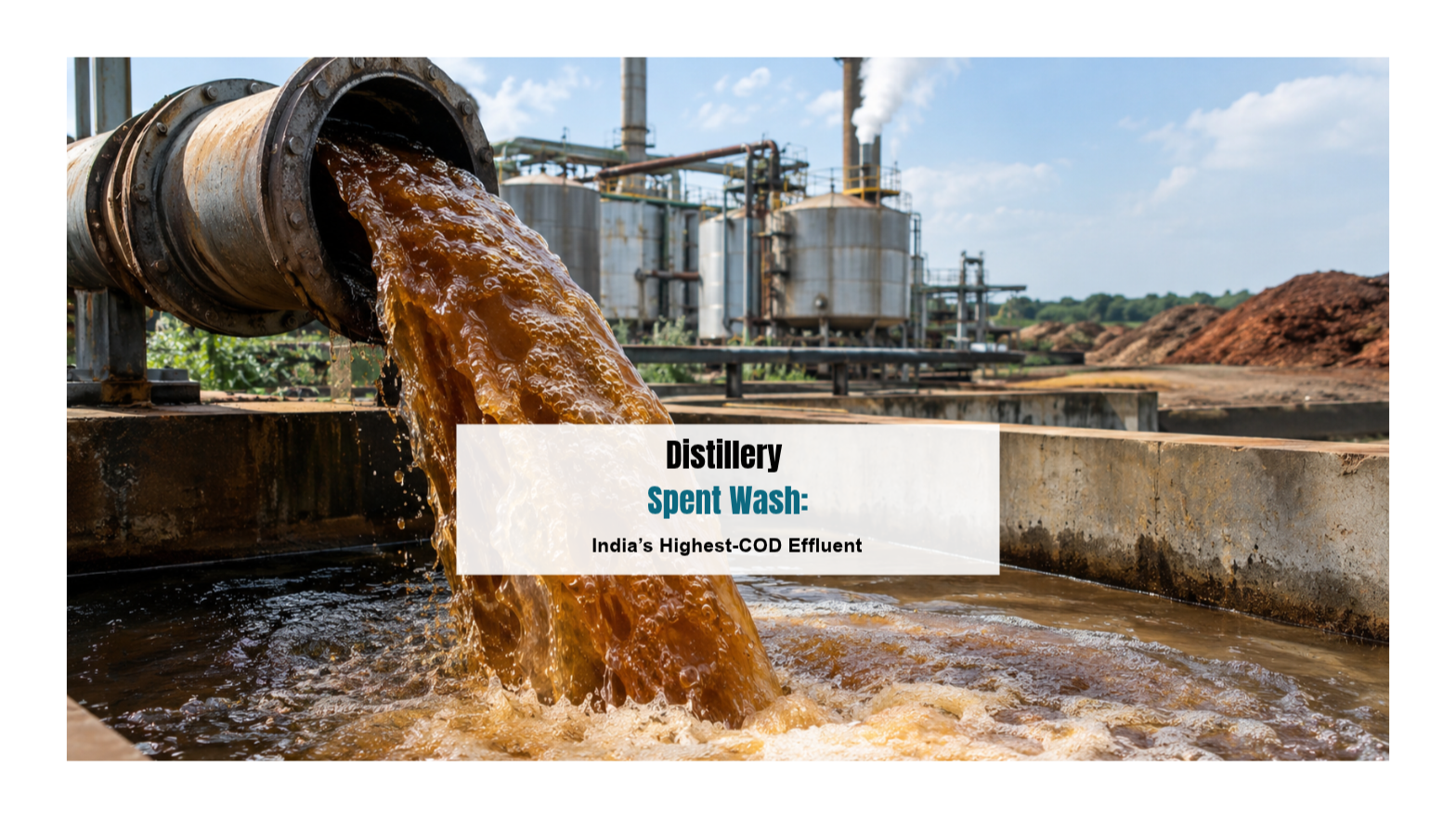

Distillery Spent Wash: India’s Highest-COD Effluent
Last Monday your digester was behaving. Gas flow was steady, the flare was quiet, and the lab sheet looked boring in the best way. This morning the VFA readings have climbed overnight, gas production has dropped, the pH is sliding, and the whole reactor smells sour. A pollution board inspection date is sitting on your calendar.
If that sounds familiar, you already know why distillery spent wash treatment is unforgiving. This is the strongest distillery effluent produced by any Indian industry, with spent wash COD typically in the range of 80,000 to 1,50,000 mg/L. Every small mistake in feed, temperature or biology shows up fast.
This article covers why the stream behaves the way it does, what is inside it, where biomethanation fails, and how specialized methanogenic cultures, aerobic polishing and ZLD fit together.
These are general values and will differ from one ETP to another based on feedstock, distillery process, and plant design.
Why Spent Wash Is in a Category of Its Own
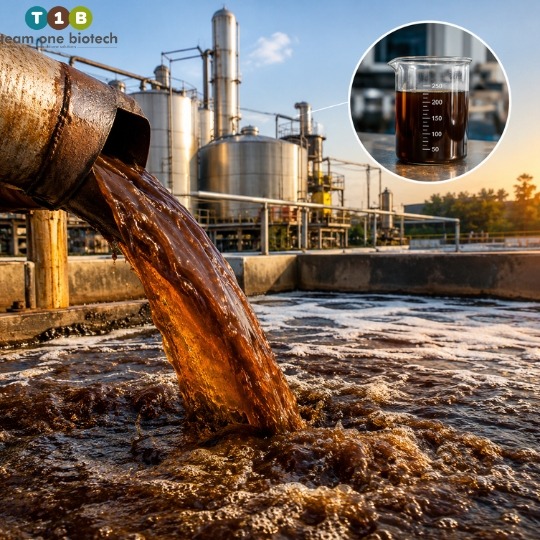
Most industrial effluents are a nuisance. Spent wash is a different class of problem. It leaves the distillation column hot, acidic, dark brown, and loaded with dissolved organics at a concentration that no conventional treatment train was designed to handle.
Put the scale in perspective. Domestic sewage typically carries COD in the range of a few hundred mg/L. Spent wash can carry hundreds of times that. A distillery producing a few hundred kilolitres of alcohol per day generates spent wash in volumes that can run to several multiples of that figure, so you are dealing with high strength and high volume together.
Molasses and grain feedstocks behave differently, and you should know which one your plant is dealing with:
- Molasses distillery ETP: Very high COD, intense dark colour from melanoidins, high sulfate and potassium, and heavy salt load. Colour and sulfate dominate the design conversation.
- Grain distillery effluent: Usually lower in colour and sulfate, but richer in suspended solids, proteins and fibre. Thin stillage, wet cake handling and fats bring foaming and solids carryover problems.
Both break conventional ETP logic for the same reason. A standard aerobic system cannot supply enough oxygen economically at this strength, and a standard anaerobic system struggles with the inhibitors riding along with the organics. The stream needs a staged approach, where each step prepares the effluent for the next.
Values such as COD and volume vary widely across plants. Treat all ranges here as indicative only.
What Is Really Inside Distillery Effluent
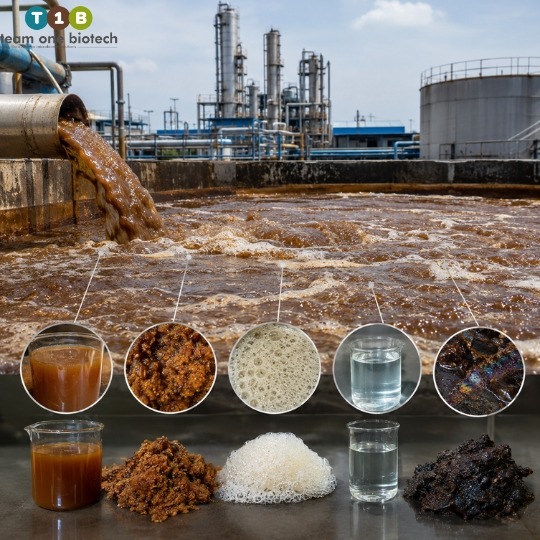
COD tells you how much organic load you have. It does not tell you why your biology is struggling. That depends on what is in the COD.
- Melanoidin pigments: Formed by Maillard reactions during molasses processing and distillation. They give the spent wash its dark brown colour and resist biological breakdown. Anaerobic treatment removes only a limited portion, so colour often survives into the downstream stages.
- Volatile fatty acids (VFA): Acetic, propionic and butyric acids are natural intermediates, but a high incoming VFA fraction narrows your safety margin. Once acid production outruns methane formation, the digester tips towards souring.
- Phenolic and polyphenolic compounds: These come from the raw material and the cooking and fermentation steps. At elevated levels they inhibit methanogens and slow granule formation.
- Sulfates: Particularly high in molasses spent wash. Sulfate-reducing bacteria compete with methanogens for the same substrates and produce H2S, which is toxic to methanogens and lowers the quality of your biogas.
- Temperature: Spent wash leaves the column at a temperature well above what most digesters tolerate. Cooling is a mandatory step, and poorly controlled cooling is a common cause of upset.
- Low pH: Raw spent wash is acidic, typically in the range of 3.5 to 5. Feeding it without adequate pH correction or recycling dilution invites acidification.
- Potassium and salts: These raise conductivity and can contribute to osmotic stress on microbes and to scaling in pipes and heat exchangers.
Each of these is a separate failure path. Many plants fix one and keep losing to another.
These are general values and will differ from one ETP to another based on feedstock, distillery process, and plant design.
The Compliance Reality: CPCB, SPCB and the ZLD Mandate

Indian distilleries operate under a clear direction from the regulators: no untreated or partially treated effluent leaves the plant. CPCB norms and SPCB compliance requirements push molasses and grain distilleries toward Zero Liquid Discharge (ZLD). Surface discharge of spent wash, even in small amounts or “just during monsoon,” is exactly the kind of lapse that draws attention.
The consequences are practical, not theoretical:
- Closure notices that can halt production
- Environmental compensation levies tied to the duration and volume of violation
- Directions that restrict operations until corrective action is verified
- Reputational pressure from lenders, auditors and brand owners
Compliance is not a one-time audit event. It is a daily operational pressure. Your SPCB can review your records, sample your effluent and visit unannounced. A digester upset on a Tuesday can become a compliance problem by Friday if the overflow has nowhere to go.
There is also the matter of incineration boiler feed. In the concentration and incineration route, the concentrated spent wash needs to meet the solids content, viscosity and consistency your boiler can handle. A poorly stabilized upstream process delivers inconsistent feed, which means unstable combustion, fouling and more downtime.
Meeting the prescribed CPCB/SPCB norms starts upstream, with a stable biological system. Everything downstream depends on it.
Where Biomethanation Systems Fail (And Why)
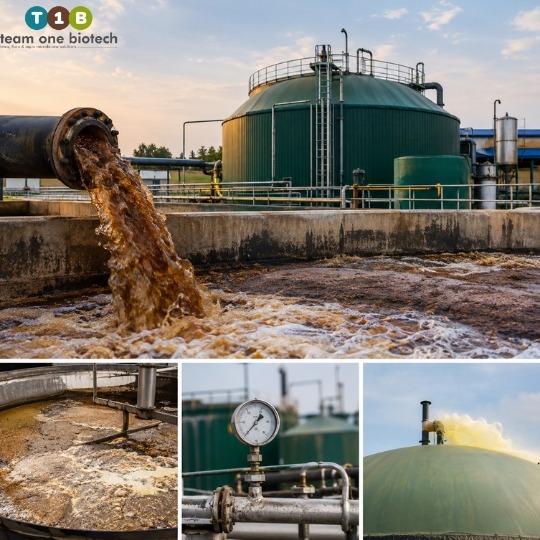
Biomethanation is the backbone of spent wash treatment. High-rate reactors such as the UASB reactor and the CSTR digester convert a large share of the organic load into biogas, and biogas recovery pays back part of the cost of operating the ETP. But these systems fail in recognisable patterns.
Shock loads. A sudden jump in organic loading, a change in feed pH, or a spike in temperature overwhelms the methanogens. This is the classic anaerobic digester shock load. Acid formers keep working at pace, methanogens slow down, and the balance tips.
VFA accumulation and pH crash. When acids build up faster than methanogens can consume them, alkalinity is used up, pH falls, and methanogens slow down even further. It becomes a self-reinforcing loop. Once pH has crashed, recovery takes much longer than the upset did.
Sulfate inhibition. High sulfate pushes sulfate-reducing bacteria ahead of methanogens. H2S builds up, biogas quality drops, and corrosion risk rises in gas lines, scrubbers and engines.
Biomass washout. In a UASB, high upflow velocity, gas hold-up or poor granule quality can carry biomass out of the reactor. Rebuilding a granule bed is slow.
Foaming. More common with grain-based effluent, and with sudden VFA changes. Foam can clog gas lines and damage downstream equipment.
Scaling. Calcium, magnesium and struvite-type deposits can foul pipes, heat exchangers and gas systems, quietly reducing capacity.
The table below links symptoms to causes and the biological response that typically helps.
| Observed sign | Probable cause | Typical biological response |
| Rising VFA, falling pH | Organic overload or inhibited methanogens | Reduce feed, restore alkalinity, support with active methanogenic culture |
| Gas production dropping steadily | Methanogen loss or phenol/sulfate inhibition | Check inhibitors, bioaugment with tolerant strains |
| High H2S in biogas | Sulfate-reducing bacteria dominating | Manage sulfate load, rebalance consortium |
| Granules breaking up, solids in outlet | Washout, poor granule integrity | Reduce hydraulic stress, reseed with granule-forming cultures |
| Persistent foaming | Sudden VFA shifts, proteins, fats | Stabilize loading, review feed variability |
These are general values and will differ from one ETP to another based on feedstock, distillery process, and plant design.
Share your digester data with us. If you are seeing any of these signs, send us your recent VFA, alkalinity, pH, gas production and loading data. Our team can review it and tell you whether the pattern points to a biological problem, a process problem, or both.
How Specialized Methanogenic Cultures Stabilize the System
This is where biology does what chemicals and hardware cannot. Methanogens are slow growers, sensitive to shock, and easily outcompeted when conditions turn. Specialized methanogenic cultures give you a stronger, more tolerant microbial base, so the digester recovers faster and survives upsets with less damage.
Strain-selection logic. Not every methanogenic culture suits every plant. Selection should reflect:
- Feedstock type (molasses or grain)
- Reactor type (UASB or CSTR)
- Operating temperature range (mesophilic or thermophilic)
- Sulfate and phenol load
- The role of acetoclastic and hydrogenotrophic methanogens in your consortium
A consortium suited to a molasses plant with high sulfate will not necessarily suit a grain plant with a fatty, fibrous feed.
Acclimatization. Even a good culture needs time to adapt to your spent wash. Gradual loading, with close monitoring of VFA, pH and gas yield, lets the consortium adjust to your inhibitors instead of being shocked by them. Rushing this step is one of the most common reasons a new culture fails to perform.
Bioaugmentation. Bioaugmentation is the planned addition of selected cultures to strengthen a working or struggling digester. It is useful during commissioning, after a washout, during seasonal feed shifts, and when you see early signs of instability. A well-timed dose can help rebuild the methanogenic population before the problem deepens.
Restart after upset. After a souring event, the typical recovery path is to stop or reduce feed, restore pH and alkalinity gradually, let VFA fall, reintroduce an active culture, and then bring loading back step by step. Skipping straight to full feed is how digesters fail a second time.
Granule health. In UASB systems, granules are your biological asset. Healthy granules carry diverse, layered consortia and settle well. Cultures that support granule formation and stability can help limit washout and improve resilience to load variation.
Tolerance to phenols and sulfates. Some methanogenic strains handle moderate phenolic and sulfide stress better than others. Selecting and maintaining these populations can help narrow the gap between what your feed delivers and what your biology can absorb.
None of this removes the need for good operations. A culture is not a substitute for loading discipline, cooling control or pH management. What it can do is widen your margin for error, which is exactly what a distillery ETP needs.
Request a strain-selection consultation or trial. Tell Team One Biotech your feedstock, reactor type and current performance, and our team will help you shortlist a culture and an acclimatization plan for your digester.
Operating Parameters That Matter
Good process control is the baseline that cultures build on. These are general working ranges for high-rate anaerobic treatment of spent wash:
- Temperature (mesophilic operation): Roughly 33 to 40 degrees Celsius
- Temperature (thermophilic operation): Roughly 50 to 58 degrees Celsius
- Reactor pH: Roughly 6.8 to 7.6
- Organic loading rate (OLR): Varies widely by reactor type, typically in the range of 4 to 12 kg COD per cubic metre per day
- Hydraulic retention time (HRT): Typically in the range of several days to over two weeks, depending on reactor type and feed strength
- VFA to alkalinity ratio: Ideally kept below roughly 0.3 to 0.4
- Biogas methane content: Commonly in the range of 55 to 70 percent
- Biogas yield: Often in the range of 0.3 to 0.5 cubic metres per kg COD removed
Watch the trends, not just the numbers. A VFA to alkalinity ratio that creeps upward over a few days tells you more than a single reading.
These are general values and will differ from one ETP to another based on feedstock, distillery process, and plant design.
From Anaerobic Output to ZLD: Polishing and Beyond
Even a well-run anaerobic system does not finish the job. Digester outlet still carries residual COD, colour, ammonia and dissolved salts. Reaching ZLD needs several more steps.
- Aerobic polishing: Activated sludge or similar aerobic treatment reduces remaining organics and ammonia. It also helps stabilize the stream before the next stage. Aerobic polishing works better when anaerobic output is consistent, which is another reason upstream stability matters.
- Colour removal: Melanoidins that survive biological treatment can be addressed through selected biological, adsorptive or oxidative approaches, depending on the site. This stage matters where colour limits or reuse targets apply.
- Concentration: Evaporation, often multiple-effect, concentrates the treated stream into a thick syrup and produces condensate.
- Incineration or composting route: The concentrate is fed to an incineration boiler, or in some plants blended into composting systems, subject to approvals. Consistent feed quality from upstream protects boiler performance.
- Condensate recycling: Condensate can be treated and reused in process water, cooling or dilution, which reduces freshwater demand and supports ZLD.
Each step depends on the one before it. A digester that swings between healthy and sour sends variable feed downstream, and the damage compounds. That is why biological stability is a compliance asset, not only a process goal.
Frequently Asked Questions
Why is distillery spent wash COD so high compared with other effluents?
It carries large amounts of dissolved sugars, organic acids, proteins and recalcitrant pigments left over after fermentation and distillation. Little of this is removed before it leaves the column, so the COD stays in the range of tens of thousands to over a lakh mg/L.
Can a UASB reactor handle spent wash on its own?
It can handle a large part of the organic load, but it rarely delivers discharge-ready quality alone. Aerobic polishing, concentration and incineration or similar routes are typically needed to reach ZLD.
What causes a digester to sour, and how can it be recovered?
Souring usually follows overloading, a sudden change in feed pH or temperature, or inhibition of methanogens. Recovery generally involves reducing feed, restoring alkalinity and pH, reintroducing an active methanogenic culture, and rebuilding load gradually.
Does bioaugmentation work for sulfate-heavy molasses spent wash?
It may help when strains are chosen for sulfide and phenol tolerance and the process is well controlled. It works best alongside sulfate management, not instead of it.
Conclusion
Distillery spent wash treatment is not forgiving, and no single piece of equipment solves it. A stable ETP rests on disciplined loading, proper cooling and pH control, a resilient methanogenic population, and downstream polishing and ZLD steps that can rely on consistent input. When the biology holds, biogas recovery improves, compliance pressure eases, and your team spends less time firefighting.
If your digester has already given you a scare, or you want to be ready before it does, bring us your data. Talk to our bioremediation team before your next shock load does the talking for you. Share your VFA, alkalinity and gas trends, and we will help you build a culture and restart plan fitted to your plant.
Disclaimer: All values and parameters mentioned in this article are general, indicative ranges. Actual figures vary for every ETP depending on raw material, process, effluent characteristics, and design. A site-specific study is always recommended.
Looking to improve your ETP/STP efficiency with the right bioculture?
Talk to our experts at Team One Biotech for customised microbial solutions.
Contact: +91 8855050575
Email: sales@teamonebiotech.com
Visit: www.teamonebiotech.com
Discover More on YouTube – Watch our latest insights & innovations!-
Connect with Us on LinkedIn – Stay updated with expert content & trends!